

Agrochemicals Container Manufacturer: High-Quality Packaging Solutions for Safe Chemical Storage
In the global agricultural industry, safe storage and transportation of chemical products are essential for protecting human health, crops, and the environment. This is where an agrochemicals container manufacturer plays a vital role. These specialised manufacturers design and produce robust, compliant, and chemically resistant containers used for pesticides, herbicides, fungicides, fertilisers, and other agricultural chemicals.
As demand for efficient farming solutions continues to rise, particularly in developing agricultural economies, the need for reliable chemical packaging has never been more important. A trusted agrochemicals container manufacturer ensures that products remain stable, secure, and compliant throughout their lifecycle.
What is an Agrochemicals Container Manufacturer?
An agrochemicals container manufacturer is a company that produces specialised packaging solutions designed to store and transport agricultural chemicals safely. These containers are engineered to withstand corrosive substances, prevent leakage, and ensure proper handling during shipping and usage.
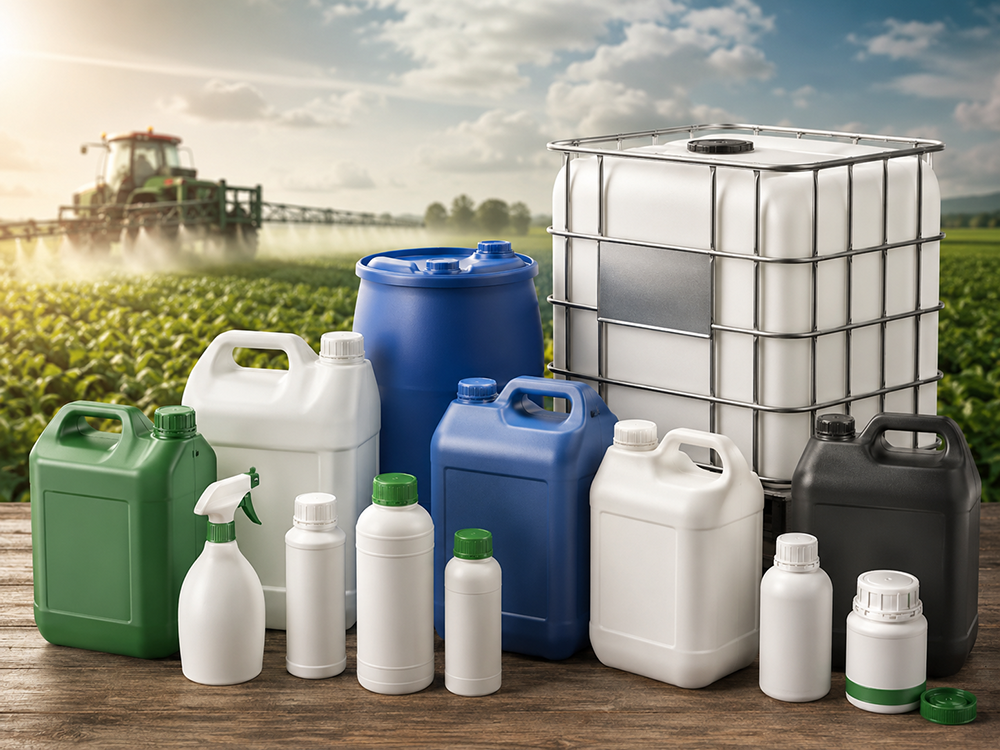
Typical products include:- HDPE chemical bottles
- Jerry cans and drums
- Spray containers
- Industrial bulk containers (IBC tanks)
- Tamper-evident packaging
- Child-resistant containers
These containers are widely used by agrochemical producers, distributors, and agricultural supply chains worldwide.
Importance of Agrochemical Packaging in Agriculture
Agrochemicals are highly sensitive substances that require careful handling. Improper packaging can lead to contamination, leakage, or chemical degradation, which may cause serious environmental and health risks.
A professional agrochemicals container manufacturer ensures:
- Safety Protection
Containers are designed to prevent exposure to toxic chemicals, reducing risks to farmers, workers, and consumers. - Product Stability
High-quality packaging prevents chemical reactions caused by sunlight, air, or moisture. - Regulatory Compliance
Manufacturers follow international safety standards to ensure products are legally approved for distribution. - Environmental Protection
Leak-proof and recyclable materials help minimise environmental contamination.
According to the Food and Agriculture Organization of the United Nations, safe chemical handling and packaging are essential components of sustainable agricultural development, particularly in reducing environmental risks associated with pesticide use.
Materials Used in Agrochemical Containers
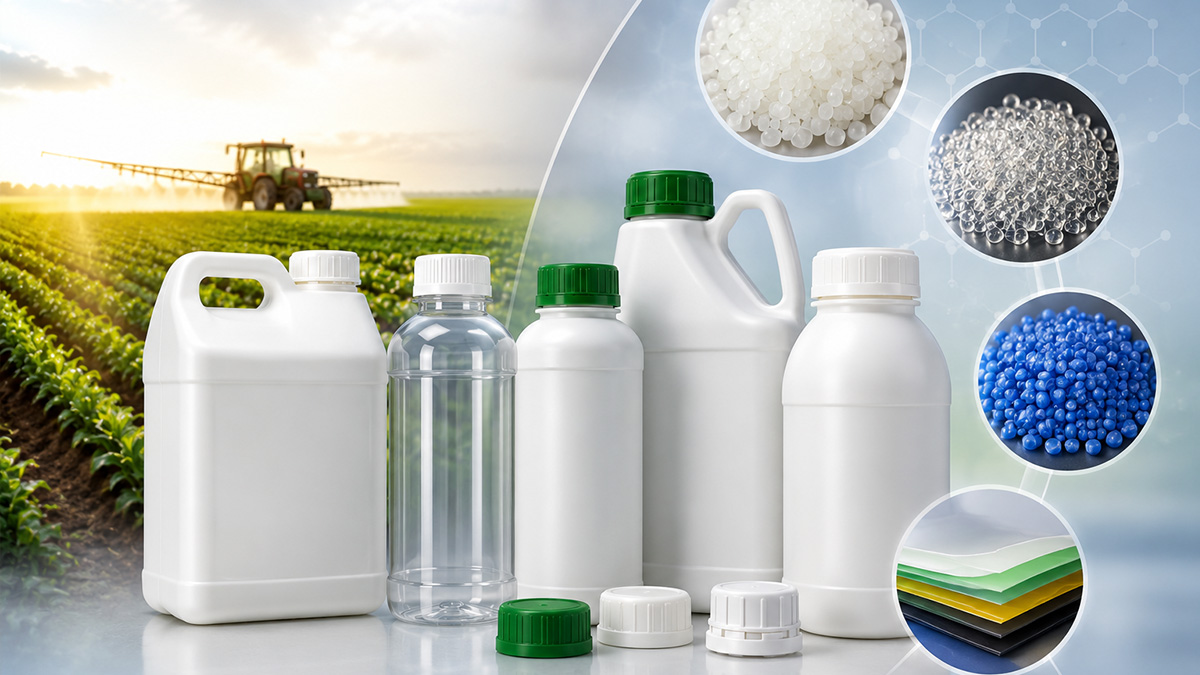
A reliable agrochemicals container manufacturer carefully selects materials that are resistant to corrosion and chemical reactions. The most commonly used materials include:
- High-Density Polyethylene (HDPE)
HDPE is the most widely used material due to its excellent chemical resistance, durability, and cost-effectiveness. - Polyethylene Terephthalate (PET)
Used for transparent containers, PET offers strength and visibility while maintaining chemical stability. - Polypropylene (PP)
PP is used for caps, closures, and certain rigid containers due to its heat resistance. - Multi-layer Barrier Plastics
These are designed for highly reactive chemicals requiring extra protection against oxygen and UV exposure.
The selection of material depends on the type of agrochemical, storage duration, and transportation requirements.
Manufacturing Process of Agrochemical Containers
A professional agrochemicals container manufacturer follows a strict production process to ensure quality and safety.
- Design and Engineering
Containers are designed using advanced CAD systems to meet capacity, durability, and safety standards. - Material Selection
Only certified raw materials are chosen to ensure chemical resistance and compliance with regulations. - Common techniques include:
- Blow moulding for bottles and jerry cans
- Injection moulding for caps and fittings
- Extrusion moulding for large containers
- Quality Testing
Containers undergo rigorous testing for:- Leak resistance
- Impact strength
- Chemical compatibility
- Pressure tolerance
- Labelling and Customisation
Manufacturers often provide branding, hazard symbols, and regulatory labels as part of the final packaging solution.
Regulatory Standards and Compliance
Compliance is one of the most critical aspects in agrochemical packaging. A professional agrochemicals container manufacturer must adhere to strict international guidelines.
Key regulatory frameworks include:
Globally Harmonised System (GHS)
The Globally Harmonized System of Classification and Labelling of Chemicals provide guidelines for classifying and labelling hazardous chemicals to ensure safe handling worldwide.
ISO Standards
Manufacturers often comply with ISO certifications such as ISO 9001 for quality management systems.
Environmental and Safety Regulations
These ensure containers are safe for human use and environmentally sustainable.
Transport Regulations
International shipping rules for dangerous goods must also be followed, especially for air and sea freight.
By meeting these standards, an agrochemicals container manufacturer ensures global acceptance of their products.
Applications of Agrochemical Containers
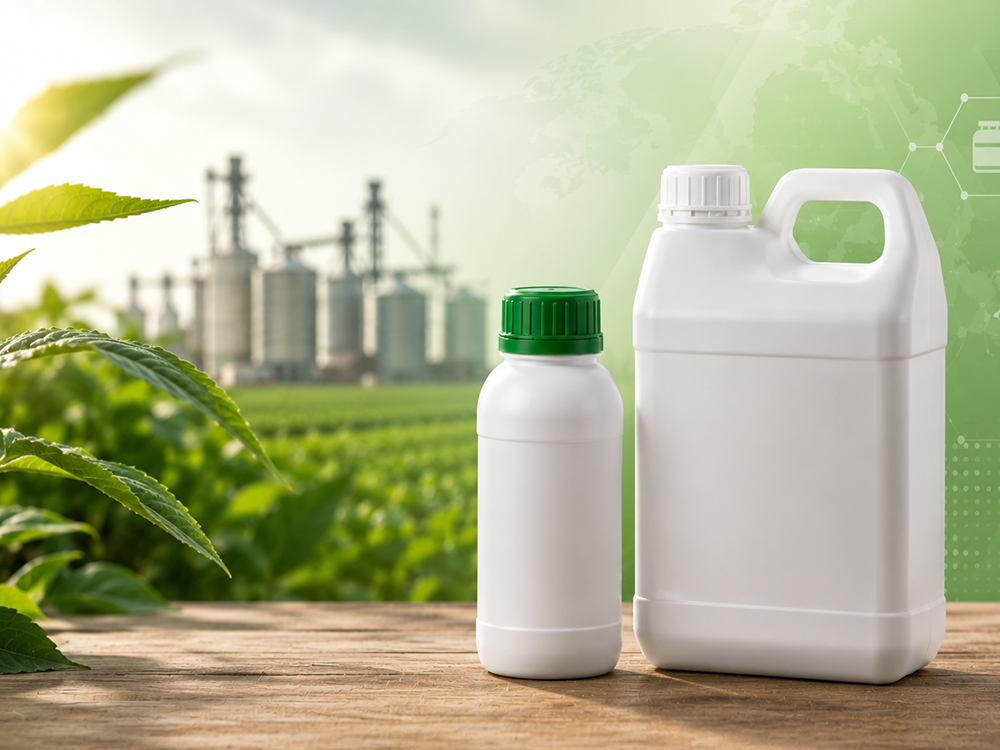
Agrochemical packaging is used across multiple agricultural and industrial sectors, including:
- Crop protection chemicals (herbicides, pesticides, fungicides)
- Fertiliser storage and distribution
- Seed treatment chemicals
- Veterinary agricultural products
- Industrial farming solutions
These containers are essential for ensuring the safe distribution of agricultural inputs across farms, plantations, and agro-industrial facilities.
How to Choose the Right Agrochemicals Container Manufacturer
Selecting the right agrochemicals container manufacturer is crucial for product safety and brand reputation. Here are key factors to consider:
- Industry Experience
Choose manufacturers with proven expertise in chemical packaging solutions. - Compliance Certification
Ensure they meet international safety and quality standards. - Material Quality
High-grade raw materials ensure durability and chemical resistance. - Customisation Capabilities
Look for manufacturers offering branding, labelling, and design flexibility. - Production Capacity
Large-scale production capability is essential for consistent supply. - Testing and Quality Control
Strict testing procedures guarantee product reliability. - Sustainability Practices
Eco-friendly production methods are increasingly important in modern packaging industries.
Sustainability Trends in Agrochemical Packaging
Sustainability is becoming a key focus for every agrochemicals container manufacturer. The industry is shifting towards greener and more efficient packaging solutions.
Key trends include:
- Recyclable HDPE containers
- Lightweight packaging to reduce material usage
- Bio-based plastics development
- Reusable industrial containers
- Reduced carbon footprint manufacturing processes
These innovations align with global efforts to reduce plastic waste and promote circular economy practices in agriculture.
Conclusion
An agrochemicals container manufacturer plays an essential role in ensuring the safe storage, transportation, and application of agricultural chemicals. From selecting high-quality materials to adhering to strict international regulations, these manufacturers help protect both human health and the environment.
As agriculture continues to modernise, the demand for safer, more sustainable, and highly durable chemical packaging will continue to grow. Businesses that invest in reliable container manufacturing partners will benefit from improved safety, compliance, and long-term operational efficiency.